
The species we select
Nymphaea caerulea
Egyptian blue water lily
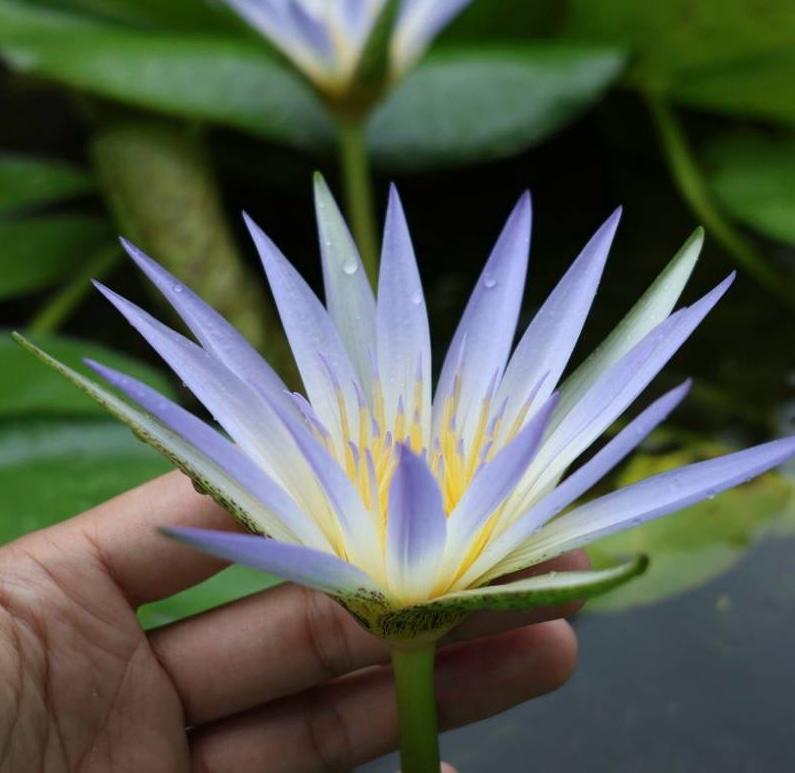
Long, slender ivory petals with blue-violet tips surround a yellow heart. The flower documented across ancient Egyptian art and iconography.
Nymphaea caerulea · Thailand
Whole flowers. One origin. Source recorded.
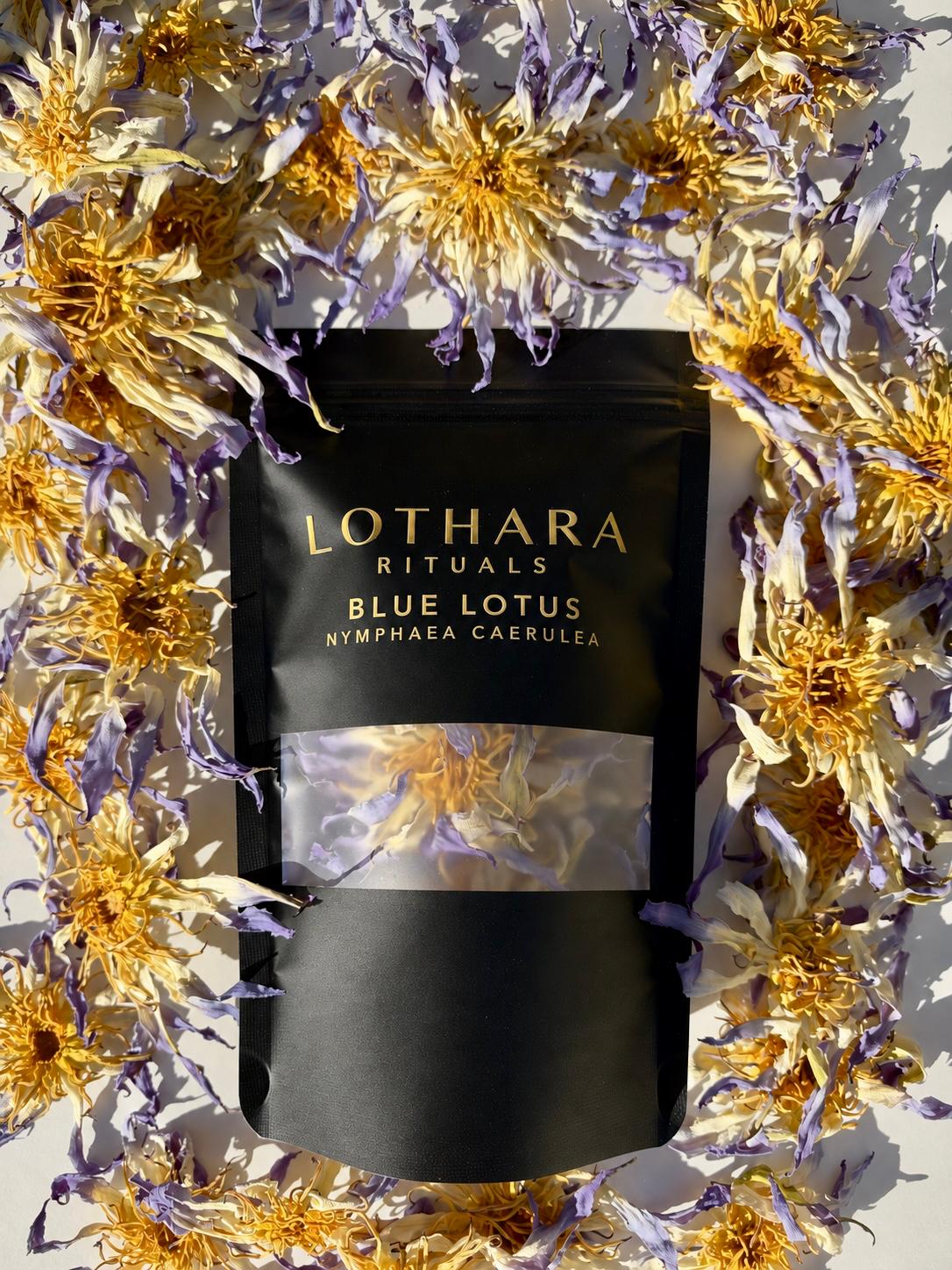
LOTHARA Blue Lotus · whole dried flowers
The product
Nymphaea caerulea · Thailand · Single origin
Secure Stripe checkout · Ships from France · 5–7 business days in France
For ritual and aromatic use. Not intended to diagnose, treat, cure, or prevent any disease.
Botanical identity
The Egyptian blue water lily, commonly known as Blue Lotus.
One species. Ivory petals, blue-violet tips, a deep yellow heart. LOTHARA works with this flower only — dried whole, never powdered, each batch traceable to its farm.

Nymphaea caerulea in bloom · Thailand


The species test
Only one is Nymphaea caerulea.
The species we select
Egyptian blue water lily
Long, slender ivory petals with blue-violet tips surround a yellow heart. The flower documented across ancient Egyptian art and iconography.

Often sold in its place
Blue water lily
Faster-growing and bulk-dried — the flower most often sold under the "Blue Lotus" name.

A lotus, but not Blue Lotus
Sacred lotus
A true lotus, valued in Asian cuisine and tradition — but botanically unrelated to the Egyptian blue water lily.

Unidentified hybrids
Tropical cultivars
Bred for uniform colour and yield. No documented botanical identity, no traceable lineage.
Same name on the label. Different flowers in the jar.
Origin
“Egyptian” refers to the history of Nymphaea caerulea. Our flowers of this same species are grown in Thailand, where we work directly with the growers.
One species. Two growers. One standard.
LOTHARA sources Nymphaea caerulea from two independent growers in Thailand, selected at source against the same botanical and quality standards — a direct relationship, fair price, no brokers. Six months to a first bloom, then one flower at a time: the plant itself limits the harvest to a few kilos per month.


From water to ritual


Who we are
We are Theos and Toppy. We met in Thailand through what felt like fate. Toppy had prayed to Buddha for someone to cross his path, and when we met, we immediately connected on a spiritual level. We later travelled through Malaysia together. After an energy healing session conducted by Toppy, I drank Blue Lotus for the first time. Toppy, who had known the flower for years, explained how rare authentic Nymphaea caerulea is and how the market is almost entirely filled with imitations. From that discovery and our conversations came one idea: to trace the authentic flower back to its source.
That search led us to farms in Thailand that had cultivated it for years and, until then, had sold it only locally. This is where LOTHARA began.

Theos & Toppy, with our growers · Amnat Charoen
Verification
Our Blue Lotus is grown in Amnat Charoen, Thailand. Photographs of the cultivation ponds, harvest and our meetings with the growers document its provenance.
See the photos from the farmsBotanical identity
Nymphaea caerulea
Documentation available on request.
Organic cultivation
Certified in Thailand
Certified by the Thai Department of Agriculture under organic standard TAS 9000-2564, for the cultivation of lotus.
HPLC analysis
June 2025
Carried out in June 2025 at the Synchrotron Light Research Institute, Thailand’s national laboratory, by high-performance liquid chromatography.

The ritual
Open the jar and take one flower.
Place it in a cup. Pour water just off the boil.
Five to seven minutes, while the colour unfurls.
Drink slowly in a quiet place and savour the moment.
Start with one flower. Then adjust the ritual to your preferences.
History
Nymphaea caerulea appears across three millennia of Egyptian art — tomb paintings, temple reliefs, funerary garlands, including those found in Tutankhamun’s tomb. A flower of iconography and daily life along the Nile.
That history is where our flower begins — and where the confusion around its name began too.
The Lotus Archive

Nymphaea caerulea · Whole flower · Thailand
From €29.95 — 5 g
Questions